google.com, pub-7005347536103574, DIRECT, f08c47fec0942fa0 Taxexcel
Breaking News
Loading...
Share It

Tuesday, 4 April 2023

  New and Old Tax Regime U/s 115 BAC

Old versus new tax scheme according to relevant 2023 Budget| The Minister of Finance has announced a new tax regime in the 2020 budget, including additional tax brackets and lower tax rates. Many taxpayers had long requested it, but it came with the condition that all deductions and exemptions allowed under the old tax system would be revoked. Moreover, the tax component applicable to the new regime has been changed in the 2023 budget, which is applicable from the financial year 2023-24 (the reference year 2024-25).

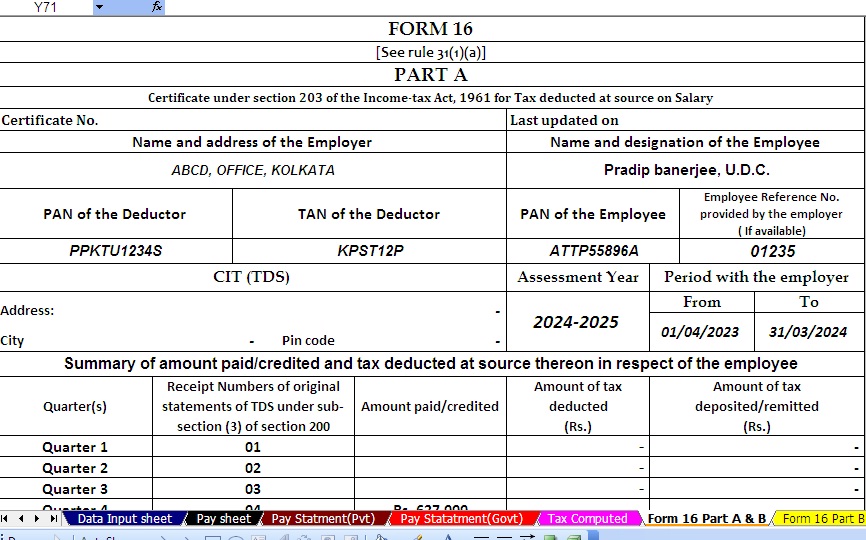
You may also like: - Auto Calculate Income Tax Form 16 Part A&B for the Financial Year 2022-23(This Excel Utility can prepare at a time 100 Employees Form 16 Part A&B in Excel)

To add to the confusion, the Treasury Secretary offered taxpayers a choice between the new tax regime and the old tax regime, leaving the choice up to the taxpayer. With all of these factors interacting, the tax code has become more complex than simple.


You ask yourself, "What would you choose - the new tax regime or the old tax regime?" This article can help you determine which tax system. Let’s look at tax brackets and tax rates, as well as the pros and cons of the two tax regimes. Followed by a comparison between the two. So, let’s get started.


New tax regime - More plates, lower tax rate, but no way to reduce taxes

There are two main differences between the new tax regime and the old tax regime.

First, under the new regime, the number of tax brackets has increased, along with a reduction in rates to sub-Rs. Range of 15 lacks.

You may also like: - Auto Calculate Income Tax Form 16 Part A&B for the Financial Year 2022-23(This Excel Utility can prepare at a time 50 Employees Form 16 Part A&B in Excel)


Second, taxpayers under the new regime will not be able to take advantage of the deductions and exemptions available under the existing tax regime.


The following is a comparison of the old tax rates and new tax rates: 

Tax Slab(Rs.)

Old Tax Rates

New Tax Rates (Old)

Tax Slab( Rs.))

New Tax Rates

0 – 2,50,000

0%

0%

0 – 3,00,000

0%

2,50,000 – 5,00,000

5%

5%

3,00,000 - 6,00,000

5%

5,00,000 – 7,50,000

20%

10%

6,00,000 – 9,00,000

10%

7,50,000 – 10,00,000

20%

15%

9,00,000 – 12,00,000

15%

10,00,000 – 12,50,000

30%

20%

12,00,000 – 15,00,000

20%

12,50,000 – 15,00,000

30%

25%

12,00,000 – 15,00,000

20%

Above Rs. 15,00,000

30%

30%

15,00,000 & above

30%


 The old tax regime is complex, to say the least. While taxes are high, there are many ways to lower your taxes.


The government has granted nearly 70 exemptions and deductions to Indian taxpayers over the years by adding sections to the Income Tax Act. This allows people to reduce their tax liability and pay fewer taxes.

While some exemptions, such as Housing Allowance (HRA) and Travel Allowance (LTA), are included in your pay, deductions allow you to reduce your tax liability by investing, saving, or spending money on goods/services of accuracy. Section 80C is one of the most popular and selected deductions, which allows you to reduce your taxable income by Rs 1,50,000.


Additionally, there are several categories that allow you to take advantage of deductions, for example, interest on your loans (both housing and education) or premiums paid for health insurance.


The followings are the most popular tax exemptions and deductions available to Indian taxpayers:


Exemptions

Deductions

House Rent Allowance

Public Provident Fund

Leave Travel Allowance

ELSS (Equity Linked Saving Scheme)

Mobile and Internet Reimbursement

Employee Provident Fund

Food Coupons or Vouchers

Life Insurance Premium

Company Leased Car

Principal and Interest component of Home Loan

Standard Deduction

Children Tuition Fees

Uniform Allowance

Health Insurance Premiums

Leave Encashment

Investment in NPS


Tuition fee for Children


Saving Account Interest


Your taxable income can be reduced by lakhs to include exemptions and deductions. However, it also means getting strategic each year to maximize your paycheck, investments, and/or savings to minimize your taxable income.

You may also like: - Auto Calculate Income Tax Form 16 Part B for the Financial Year 2022-23(This Excel Utility can prepare at a time 100 Employees Form 16 Part B in Excel)

Past income tax vs. old income tax. New tax regime: Which should you choose?

Because everyone is eligible for different deductions, sources, and amounts of income, the same rule may not apply to everyone. Thus, it becomes important for taxpayers to examine and understand the tax payable under both regimes before deciding which one to choose.


While the new system may look good at first because of the lower tax rates, this is not the case.


Because, with these changes, with the new tax regime, anyone earning Rs. 7.50 lakh will have to pay Rs. 25,000 in taxes. While those earning Rs. 10 faults save Rs. 37,500 with taxes.


Here’s what you need to do:

Step 1 – Calculate any tax exemptions (refunds) you can claim

Remaining in rent entitles you to HRA (Home Rent Allowance), the maximum payroll deduction. In addition, other tax-free components such as LTA (Leave Travel Allowance), Food bills, Telephone bills, etc. are also included

You may also like: - Auto Calculate Income Tax Form 16 Part B for the Financial Year 2022-23(This Excel Utility can prepare at a time 50 Employees Form 16 Part B in Excel)


The type used it. If you choose to move to the new tax regime, everything that is “untaxed” becomes “taxed”.


Step 2 - Calculate any tax deductions you are claiming

As a salaried person, you automatically take two deductions:

Standard deduction of Rs 50,000


The contribution to your Employees Provident Fund (EPF).


Even if you continue to contribute to the EPF, you will not be eligible for these deductions under the new tax regime. In addition, you can’t claim the deduction for your home loan (if you have one) or life insurance, or health insurance that previously helped you lower your taxable income.


Step 3 – Combine these tax exemptions and tax deductions and subtract them from your paycheck to get your taxable income.


Step 4 – Same as, calculating your taxable income if the deductions, as well as exemptions, were excluded.


These results can help you to decide which tax regime to opt for.

Here are two examples of tax liabilities with and without tax exemption and/or deductions under the old and new tax regimes for your convenience.


Annual Income

Old Tax Regime Rates

New Tax Regime Rates (old)

Annual Income

New Tax Regime Rates

Up to Rs. 2.5 lakhs

Exempt

Exempt

Up to Rs.  3 lakhs

NIL

Rs.  2.5 to 5 lakhs*

5%

5%

Rs.  3 to 6 lakhs

5%

Rs.  5 to 7.5 lakhs

20%

10%

Rs.  6 to 9 lakhs

10%

Rs.  7.5 to 10 lakhs

20%

15%

Rs. 9 to 12 lakhs

15%

Rs.  10 to 12.5 lakhs

30%

20%

Rs.  12 to 15 lakhs

20%

Rs.  12.5 to 15 lakhs

30%

25%

Rs.  12 to 15 lakhs

20%

Above Rs.15 lakhs

30%

30%

Rs. 15 lakhs and above

30%


Your taxable income can be reduced by lakhs to include exemptions and deductions. However, it also means that you need to find ways to maximize your paycheck, investments, and/or savings each year to keep your taxable income low.

You may also like: - Auto Calculate Income Tax Form 16 Part B for the Financial Year 2022-23(This Excel Utility can prepare at a time 100 Employees Form 16 Part B in Excel)


Past income tax vs. old income tax. New tax regime: Which should you choose?

Because everyone’s eligibility for deductions, sources, and amounts varies, the same rule may not apply to everyone. Thus, it becomes important for taxpayers to examine and understand the tax payable under both regimes before deciding which one to choose.


While, at first glance, it appears that the new system is better for lower taxes, this is not the case.


With these changes, as per the new tax regime, who's earning between Rs. 7.50 lakh will pay Rs. 25,000 in taxes. While those earning Rs. 10 lacks will save Rs. 37,500 with taxes.

You may also like: - Auto Calculate Income Tax Form 16 Part A&B and Part B for the Financial Year 2022-23(This Excel Utility can prepare One by One Form 16 Part A&B and Part B in Excel)


Contribution to  Employees Provident Fund (EPF).


Even if you continue to contribute to the EPF, you will not be eligible for these deductions under the new tax regime. Also, you won’t be able to claim deductions for your home loan (if you have one) or life insurance policies, or health insurance policies that previously helped you reduce your taxable income.


Step 3 – Combine these tax exemptions and tax deductions and subtract them from your paycheck to get your taxable income.


Step 4 – Same as, calculating your taxable income if these deductions as well as exemptions were excluded.


The results can help you to decide which one is the tax regime to opt for.

Here are two examples of tax liabilities with and without tax exemption and/or deductions under the old and new tax regimes for your convenience.


The Income Tax Section 87A provides a tax refund to taxpayers if their total income is not more  than Rs 5 lakh after deducting  deductions 80C to 80U


Example 1 - Taxpayer with Income of Rs.12.5 lakhs

According to the tax slabs given above, the rate of the old tax regime is 30% and the rate of the new tax regime is 25% for a salary income of 12.5 lakhs. Let us now calculate the total tax due after taking the deductions allowed under the old tax regime.


Particulars

Old Tax Regime

New Tax Regime (Old)

New Tax Regime

Annual Income

12,50,000

12,50,000

12,50,000

Taxable Income

12,50,000

12,50,000

12,50,000

Less- Standard Deduction

50,000

-

50,000

Less- Deductions U/s 80C

1,50,000

-

-

Less- Deductions U/s 80D*

75,000*

-

-

Taxable Income

9,75,000

12,50,000

12,00,000

Total Tax Payable

1,11,800( Approx)

1,30,000

93,600


(*) assuming for themselves and their dependent parents are senior citizens Rs 25,000 and Rs 50,000 respectively.


If you opt for the old tax regime instead of the new one, you would save another Rs 8,000 in taxes.

Apart from the above deductions, HRA, and other deductions can also be claimed under the old regime.


Example 2 - Taxpayer with Net Income of Rs. 8 lakhs from Salary


Particulars

Old Tax Regime

New Tax Regime (Old)

New Tax Regime

Annual Income

8,00,000

8,00,000

8,00,000

Taxable Income

8,00,000

8,00,000

8,00,000

Less- Standarad Deduction

50,000

-

50,000

Less- Deductions U/s 80C

1,50,000

-

-

Less- Deductions U/s 80D*

50,000

-

-

HRA/LTA & Other

50,000

-

-

Taxable Income

5,00,000

8,00,000

7,50,000

Total Tax Payable

0

46,800

31,200


The important thing


Same the new and the old income tax slab have their advantages and disadvantages. Whether you choose the new or old tax regime there should be certainly a doubt in mind - whether you should save and use life insurance or not.


The goals of buying and saving/ investing in life insurance should be to achieve your life goals and protect your family’s future, not just to take advantage of tax benefits.

Download Auto Calculate Income Tax Arrears Relief Calculator U/s 89(1)with Form 10E From the F.Y.2000-01 to F.Y.2023-24(Updated Version)

Old versus new tax scheme according to relevant 2023 Budget
 
Old versus new tax scheme according to relevant 2023 Budget

Old versus new tax scheme according to relevant 2023 Budget

Monday, 3 April 2023

  Tax benefits of New and Old Tax Regime as per Budget 2023| According to the actual Tax Slab on

 your total income found under the old or new tax system, each salaried employee will be subject to tax.

 Payroll employees must file income tax returns at the beginning of the 2023-2024 tax year because,

 after various deductions, income tax is calculated based on various tax brackets. As a result, tax

 planning must begin with the start of a new tax year. Under the new tax system, new income tax slabs

 and rates are proposed in the Finance Law of 2023.


The two major announcements made in the 2023-2024 Union Budget were that the Ministry of Finance increased the tax exemption limit under the new tax regime from Rs 2.5 lakh to Rs 3 lakh and that a standard deduction of Rs 50,000 was introduced. Under the new tax. the regime, which was previously available only under the old tax system. However, these changes will take effect from next year, that is, in AY 2024-25. Do salaried people know that they can reduce the effective tax rate to zero if they receive a gross salary of Rs. 10 lakhs per fiscal year? We will find out with our experts.

Download and Prepare at a time 50 Employees Form 16 Part B for the Financial Year 2022-23 and Assessment Year 2023-24 in Excel

Each salaried employee will be taxed at marginal slab rates on his or her total income (i.e., gross income minus eligible deductions). Thus, for a salaried taxpayer, his wage income will form a majority component; You will be asked to take into account any other income, such as interest income from banks, rental income, etc. for the purposes of calculating his taxes. Salaried people with no other major source of income must cope not only with rising inflation but also with the rising cost of living.


Therefore, for better tax planning, employees should make efficient use of the deductions and exemptions available under the IT Act. So, any taxpayers with a gross salary of Rupees Ten lakhs can entitle the following deductions generally claimed under the old tax system to reduce the effective tax rate to zero:

Download and Prepare at a time 50 Employees Form 16 Part A&B for the Financial Year 2022-23 and Assessment Year 2023-24 in Excel


1. Standard discount of Rs. 50,000 under Section 16(ia) of the Information Technology Act.


2. Deduction under Section 80C of the Information Technology Act up to Rs. 1,50,000 in payments made to Life Insurance premiums, Provident Fund, National Provident Certificate, Housing Loan Administrator, etc.


3. Deduction under Section 80CCD (1B) of the Information Technology Act of Rs. 50,000 contributions to the National Pension Regime notified by the Central Government

4. Deduction under Section 80d of the Information Technology Act of Rs. 25,000 (Rs. 50,000 in the case of seniors) for payments of health insurance premiums.


5. Deduction under section 24 (b) of the IT Act in respect of interest on the Mortgage Loan up to Rs. 2,00,000 Pa while repayment of the principal component of the loan can be claimed as a deduction of u/80c as mentioned above.

Download and Prepare at a time 100 Employees Form 16 Part B for the Financial Year 2022-23 and Assessment Year 2023-24 in Excel


If the taxable income of the taxpayer is less than Rs. 5,00,000, such taxpayer will be eligible to claim a deduction under Section 87A of the IT Act up to Rs. 12500/-


In addition to the above, salaried taxpayers can also take advantage of the 10 exemptions for housing rental subsidies, travel permits, vacation pay, etc. based on the components of your salary specified in your CTC. The limits for these deductions are usually calculated based on certain salary components, such as base salary, benefit allowance, etc.


Note that a salaried person who opts for the proposed new tax regime has an income of Rs. 700,000 after a standard deduction U/s 10(1) of Rs 50,000) and would have zero tax liability.


Note: Each salaried individual will have the option to choose between the old and the new tax system for the 2023-24 tax year, and it has been announced that the proposed new tax system will be the "default" tax system.

Download and Prepare at a time 100 Employees Form 16 Part A&B for the Financial Year 2022-23 and Assessment Year 2023-24 in Excel


Although you were not in the limelight, even the old tax system allows you to claim the following deductions and reduce your tax liability to zero if your income is up to Rs. 10 lakhs

• Standard discount of Rs. 50,000/-

• PT (Professional Tax) - Rs. 2500/-

• Deduction below 80C - Rs. 1,50,000/-

• Interest on H.B.Loan - Rs. 2,00,000/-

• Additional NPS - Rs. 50,000/-

• Deduction for Mediclam below 80 Years - Rs. 50,000/-

By using the maximum cap under such deductions, you can reduce your net taxable income to Rs. 5 lakhs and thus also reduces the tax amount to zero under the old tax regime.


Download Auto Calculate Income Tax Preparation Software All in One in Excel for all the salaried persons for the F.Y.2023-24 & A.Y.2024-25 

Tax benefits of New and Old Tax Regime as per Budget 2023

Form 16

Tax benefits of New and Old Tax Regime as per Budget 2023

This Excel Utility can prepare at a time your Tax computed Sheet 

+ Auto Calculate H.R.A. Exemption U/s 10(13A) 

+ Auto Calculate Income Tax Arrears Relief Calculator U/s 89(1) with Form 10 E 

+ Automatic Income Tax Form 16 Part A&B and Part B for the F.Y.2023-24

Thursday, 30 March 2023

 Relief for taxpayers who marginally earn more than Rs 7 lakh as per Budget 2023| People earning

income marginally above the maximum tax of Rs 7 is required to pay tax only on differential income. 

Providing relief to taxpayers opting for a new tax system, the government amended the Finance Bill 2023 and passed it in the Lok Sabha. 

Explaining the clause, the Finance Ministry said that under the new tax regime effective from April 1, if a taxpayer has an annual income of Rs 7 lakh, he is not taxed. But if you have an income of Rs 7,00,100/pay a tax of Rs 25,010.

You may also like:- Automated Income Tax Form 16 Part B for the Financial Year 2022-23 and Assessment Year 2023-24(This Excel Utility can prepare at a time 50 Employees Form 16 Part B) 

Income Tax Form 16 Part B

Therefore, the additional income of Rs 100 results in a tax of Rs 25,010. Thus, marginal relief is

 proposed so that the tax paid by one does not exceed the income that exceeds Rs 7 lakhs (Rs 100 in this

 case), the ministry said. 

    The 2023-24 budget has announced a tax rebate whereby those with an annual income of up to Rs 7 lakh will not be taxed under the new tax regime. It was a move that experts say prompted payroll taxpayers to switch to a new tax system that provides no investment relief. 

Under the new revamped tax system, Rs 3 lakhs worth of income will not be charged. Income between Rs 3-6 lakh will be taxed at 5%; Rs 6-9 lakh at 10%, Rs 9-12 lakh at 15%, Rs 12-15 lakh at 20%, and income of Rs 15 and above will be taxed at 30%. In addition, the new system allowed a standard discount of Rs 50,000.

You may also like:- Automated Income Tax Form 16 Part A&B for the Financial Year 2022-23 and Assessment Year 2023-24(This Excel Utility can prepare at a time 50 Employees Form 16 Part A&B)


Relief for taxpayers who marginally earn more than Rs 7 lakh as per Budget 2023

Now, the government has introduced amendments to the Finance Act 2023, which has given a "marginal exemption" to taxpayers who have an annual income of just over Rs 7 lakh. 

Although the government has not specified the income threshold that would be eligible for the marginal exemption, tax experts said that based on the calculation, individual taxpayers with an income of Rs 7,27,777 will benefit from this exemption. 

Download Automated Income Tax Preparation Excel-Based Software All in One for the Government & Non-Government (Private) Employees for the F.Y.2023-24 and A.Y.2024-25

Relief for taxpayers who marginally earn more than Rs 7 lakh as per Budget 2023

Income Tax Form 10E

Feature of this Excel Utility:- 

1) This Excel utility prepares and calculates your income tax as per the New Section 115 BAC (New and Old Tax Regime)


2) This Excel Utility has an option where you can choose your option as a New or Old Tax Regime


3) This Excel Utility has a unique Salary Structure for Government and Non-Government Employees Salary Structure.


4) Automated Income Tax Arrears Relief Calculator U/s 89(1) with Form 10E from the F.Y.2000-01 to F.Y.2023-24 (Update Version)


5) Automated Income Tax Revised Form 16 Part A&B for the F.Y.2023-24


6) Automated Income Tax Revised Form 16 Part B for the F.Y.2023-24

Wednesday, 29 March 2023

  The Income Tax Act of 1961 offers a number of home loan tax deductions and encourages

 residents to invest in real estate. Home loan borrowers should be aware of all available home loan

 tax deductions because doing so can allow you to significantly reduce your tax liability.


These are the tax benefits or income tax deductions on home loans that every home loan borrower should be aware of.


Discount when paying the principal of the home loan


The EMI you pay consists of two parts: the principal repayment and the interest paid. The principal component of EMI is deductible under Section 80C of the Income Tax Act of 1961 for self-occupied property. Section 80C deductions can also be claimed for stamp duty and filing fees paid when you purchased a home.

You may also like:- Automated Income TaxForm 16 Part B for the Financial Year 2022-23 and Assessment Year 2023-24(This Excel Utility can prepare at a time 50 Employees Form 16 Part B)

Discount on interest paid on a mortgage loan

The taxpayer can deduct both the interest paid on a mortgage loan and the principal amount paid on the loan. For the case of a self-occupied property, section 24(b) allows the deduction of interest paid on the mortgage loan up to a maximum of Rs 2 lakhs in any given financial year.


If you own two houses and one of them is vacant or occupied by your parents, Section 24 also covers interest on any loans to buy another house. The total tax deduction for home loans for two houses cannot exceed Rs. 2 lakhs in the fiscal year.


Additional discount on the purchase of an affordable home


An additional discount on the interest paid on the mortgage loan used to purchase the home is available if you purchase it in the affordable housing category. Rs 1.5 lakh may deduct under section 80EEA in the financial year. A maximum of Rs 2 lakh plus deduction is allowed under section 24. Thus, a taxpayer can claim up to Rs 3.5 lakh deduction in a tax year in case of buying a reasonable house.


Please note that you cannot claim the same amount twice in two different tranches like as claim U/s 24 B and 80EEA

You may also like:- Automated Income Tax Form 16 Part A&B for the Financial Year 2022-23 and Assessment Year 2023-24(This Excel Utility can prepare at a time 50 Employees Form 16 Part A&B)


Deduction under Section 80EE


For the 1st-time home purchases taking out mortgage loans, this deduction was reinstated in the 2016-17 tax year. Taxpayers who got a home loan in the 2016-2017 tax year he is eligible to claim an extra tax deduction U/s 80EE of up to Rupees Fifty Thousand. Recently, under section 24(B), a home loan borrower who paid interest on the loan can deduct that interest from his total annual income up to a maximum of Rs 2 lakh.


To be eligible for this discount, you must meet the following requirements:

a) Only residential properties will be eligible for the increased loan interest deduction.

It is only available to first-time homebuyers.

c) The annual maximum fringe benefit is limited to Rs. 50,000.

d) The value of the house cannot exceed Rs. 50 lakh when applying for a loan.

e) The loan cannot be for more than Rs 35,000.

f) The home loan may be sanctioned between April 1, 2016, and March 31, 2017.

You may also like:- Automated Income TaxForm 16 Part B for the Financial Year 2022-23 and Assessment Year 2023-24(This Excel Utility can prepare at a time 100 Employees Form 16 Part B)


If you already obtained a home loan in the 2016-2017 tax year, you can still claim this discount until the loan is paid off in full. This tax benefit is not available for new home loans obtained after April 1, 2017.


How do I claim tax benefits under Section 80EEA?

To qualify for benefits under Section 80EEA, a person must meet a number of requirements. These requirements are the following:

a) The home loan entitled from 1st April 2019, and 31 March 2022;

b) Stamp duty on house property cannot exceed Rs. 45 deficiencies;

c) a taxpayer may not own any residential property as of the date the loan is sanctioned, and d) an individual taxpayer may not be eligible for a deduction under current Section 80EE of the Act.


Download Automated Income Tax Preparation Excel-Based SoftwareAll in One for the Non-Government (Private) Employees for the F.Y.2023-24 andA.Y.2024-25 

Tax advantages of a home loan

Tax advantages of a home loan

Tax advantages of a home loan

Income Tax Form 12 BA

Feature of this Excel Utility:-


1) This Excel utility prepares and calculates your income tax as per the New Section 115 BAC (New and Old Tax Regime)


2) This Excel Utility has an option where you can choose your option as a New or Old Tax Regime


3) This Excel Utility has a unique Salary Structure for Non-Government Employees Salary Structure.


4) Automated Income Tax Form 12 BA


5) Automated Income Tax Revised Form 16 Part A&B for the F.Y.2023-24


6) Automated Income Tax Revised Form 16 Part B for the F.Y.2023-24

google.com, pub-7005347536103574, DIRECT, f08c47fec0942fa0